
Will a Short Sale Ruin My Credit? The Honest Truth | Land to Coast Team
Will a Short Sale Ruin My Credit? The Honest Answer
Will a short sale hurt your credit? Yes, it can. But the bigger question is whether it may be a more manageable path than foreclosure in your specific situation.
If you are facing financial hardship and struggling to keep up with your mortgage payments, you have likely encountered conflicting advice online. Some sources claim a short sale allows you to walk away unscathed, while others treat it as identical to a complete financial disaster. The truth sits squarely in the middle.
A short sale is a serious credit event, but it is not an insurmountable one. Understanding how it actually impacts your credit score, how long those effects last, and how it positions you for future homeownership requires looking past oversimplified marketing claims and focusing on the underlying mechanics of distressed real estate.
The Direct Answer: How Does a Short Sale Affect Your Credit?
A short sale will lower your credit score, but there is no universal point-drop number that applies to every homeowner. Credit scoring models do not deduct a single fixed penalty for executing a short sale. Instead, the final impact depends on your starting credit profile, how your lender reports the transaction, and how many monthly payments were missed leading up to the sale.
When a lender agrees to a short sale, they allow you to sell your home for less than the remaining mortgage balance and accept the proceeds to satisfy the loan. On your credit report, this transaction typically appears as "settled for less than full amount," "paid settled," or a similar phrase indicating that the original obligation was not fulfilled according to its primary terms.
A short sale should never be framed as having "no credit damage." Claiming that a short sale preserves your credit entirely is misleading. Any real estate professional or adviser who tells you a short sale leaves your credit untouched is omitting the realities of credit reporting and lender requirements.
What Determines the Credit Impact of a Short Sale?
Because there is no single score adjustment for a short sale, multiple variables dictate how severely your credit profile will be affected.
1. Payment Delinquency and Missed Payments
In most short sale scenarios, the credit damage begins long before the closing table. Lenders rarely review or approve a short sale application unless the account shows late payments or verified financial hardship. Each 30-, 60-, or 90-day missed payment logged prior to the completion of the sale penalizes your score incrementally.
2. Prior Credit History and Starting Score
Credit scoring systems operate on proportion. Homeowners who begin with high credit scores often experience a larger numerical point drop than homeowners whose scores were already lower. A pristine credit profile has more points to lose when a major derogatory event occurs.
3. Settlement Terms with Your Lender
How your mortgage servicer files the final settlement agreement with the credit bureaus matters. A short sale that includes a full waiver of deficiency—meaning the lender formally waives their right to collect the remaining unpaid balance—reports differently than a file where a secondary lien or deficiency judgment remains outstanding.
4. Overall Debt and Payment Performance
Your mortgage is only one piece of your overall credit utilization. If you maintain on-time payments across auto loans, credit cards, and personal loans during the short sale process, your broader credit framework will recover faster than if multiple credit lines enter default simultaneously.
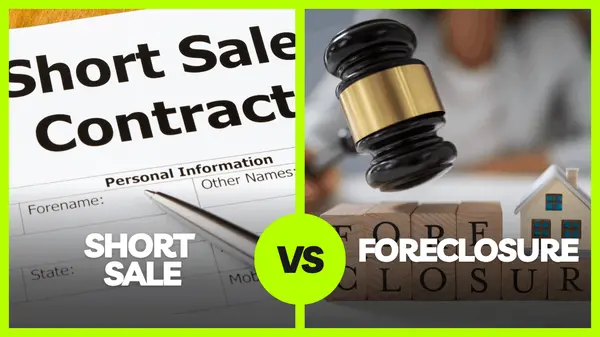
Short Sale vs. Foreclosure: Credit Impact Compared
Choosing between a short sale and letting a home go to foreclosure is often a choice between two difficult outcomes. However, looking at the qualitative differences between the two reveals why a short sale is often preferred when keeping the home is no longer possible.
| Consideration | Short Sale | Foreclosure | |
| Control Over Process | You actively list and sell the home with your real estate agent. | The lender seizes the property through legal proceedings. | |
| Public Record Impact | Reported primarily as a credit settlement event. | Involves a legal judgment and public court filings. | |
| Lender Negotiations | Deficiency waivers can often be negotiated upfront. | Higher risk of deficiency judgments depending on state laws. | |
| Waiting Period (Fannie Mae) | Generally 4 years standard waiting period. | Generally 7 years standard waiting period. |
While both events reflect an unfulfilled mortgage contract, a foreclosure represents an involuntary legal recovery action by the lender. A short sale demonstrates a cooperative, negotiated resolution to an insolvent loan.
From an underwriting perspective, future lenders look more favorably on borrowers who actively managed an economic hardship through a short sale rather than allowing the property to enter judicial or non-judicial foreclosure.
Credit scores can be rebuilt over time through consistent financial habits. Eliminating unmanageable mortgage debt, avoiding the legal weight of a foreclosure, and establishing a stable path forward are far more impactful to your overall financial well-being than a short-term drop in points.
Guidance You Can Trust in Northeast Florida
Navigating a potential short sale requires local real estate expertise combined with clear, realistic guidance. The Land to Coast Real Estate Team at Keller Williams Atlantic Partners serves homeowners throughout Northeast Florida including Jacksonville, Jacksonville Beach, Ponte Vedra, Green Cove Springs & surronding communites.
When facing mortgage distress, you do not need sales pitches or unachievable promises about preserving your credit score. You need honest advice, an accurate valuation of your home, and an experienced team in your corner who understands how to negotiate with lenders effectively.
If you are trying to determine whether a short sale, loan modification, or traditional sale is right for your circumstances, reach out to the Land to Coast Real Estate Team today for a confidential consultation. Call or text us at 912-614-2392
Recent Posts