
Can You Sell Your House Before Foreclosure in Florida?
Can You Sell Your House Before Foreclosure in Florida?
Yes many homeowners can sell their house before a foreclosure sale in Florida. Whether a traditional sale, a lender-approved short sale, or another path makes sense depends on your home’s value, mortgage payoff, liens, court timeline, and your lender’s requirements.
If you are behind on payments or have received foreclosure paperwork, it is important to act quickly—but not panic. A foreclosure does not happen overnight, and selling may still be possible before the property is sold at a public foreclosure auction.
At Land to Coast, Kaitlyn Hamelin and Iva Zovko help homeowners throughout Jacksonville, Jacksonville Beach, Ponte Vedra Beach, St. Johns County, and Northeast Florida understand the real-estate side of their options. Our role is to give you a clear picture of your home’s current market value, what a sale could look like, and whether a traditional sale or potential short sale may be worth exploring.
Important: This article provides general educational information, not legal, tax, credit, financial, or lending advice. If you have received a foreclosure lawsuit, court notice, final judgment, or sale date, speak with a qualified Florida foreclosure attorney and a HUD-approved housing counselor as soon as possible.
Quick Answer: Can You Sell Before Foreclosure?
In many cases, yes. A homeowner may be able to sell a Florida property before the foreclosure sale is completed.
There are two common scenarios:
-
You have enough equity to sell normally.
If your home’s likely sale price is enough to pay off the mortgage, liens, closing costs, and other required expenses, a traditional sale may be possible. -
You owe more than the home can sell for.
If the expected sale proceeds will not pay off the mortgage balance and sale costs, a short sale may be an option. In a short sale, the lender must approve the sale and its terms before closing.
The key word is before the foreclosure sale. Once the property is sold at a public auction and the process moves toward transfer of title, your ability to sell it as the owner can end. Under Florida’s judicial-sale procedure, a final judgment directs the clerk to sell the property on a stated date generally not less than 20 days and not more than 35 days after the judgment, unless the plaintiff consents to a later date.
That is why waiting until the last minute can be risky. A sale requires time for pricing, marketing, buyer financing, inspections, title work, payoff coordination, and when applicable lender review of a short-sale package.
How Foreclosure Works in Florida
Florida is a judicial foreclosure state. That means the lender generally must file a lawsuit and obtain a court judgment before the property is sold through the foreclosure process.
The exact timeline varies substantially based on the loan, the court case, the lender or servicer, the homeowner’s response, and other factors. But the broad sequence often looks like this:
-
Mortgage payments are missed.
-
The loan servicer sends delinquency notices and attempts to communicate.
-
The lender may send a demand or acceleration notice.
-
A foreclosure lawsuit may be filed.
-
The court may enter a final judgment of foreclosure.
-
A foreclosure sale date is scheduled and publicly noticed.
-
The property is sold at public auction if the matter is not otherwise resolved.
Florida law requires public notice of a judicial sale for at least two consecutive weeks on a publicly accessible website or, in certain circumstances, in a newspaper. The notice identifies the property, the sale’s time and place, and the case information.
The practical takeaway is simple: the earlier you understand your options, the more room you may have to make an informed decision.
Traditional Sale vs. Short Sale
A homeowner facing foreclosure does not automatically need a short sale. The first step is to determine what the property could realistically sell for in today’s market and compare that to all amounts that must be paid at closing.
| Question | Traditional sale | Short sale | ||
|---|---|---|---|---|
| Will the sale proceeds cover the mortgage payoff and costs? | Usually, yes | No—there is a projected shortfall | ||
| Does the lender need to approve the sale price? | Usually not, as long as the mortgage is paid in full | Yes | ||
| Can there be other liens or claims to resolve? | Yes | Yes; all necessary parties may need to approve | ||
| Is approval guaranteed? | No sale is guaranteed | No; lender approval is required | ||
| Can the owner choose a buyer? | The owner can evaluate offers | The owner can choose an offer to submit, but the lender must approve the transaction | ||
| Are there potential legal, credit, or tax consequences? | Possibly | Possibly; seek professional guidance |
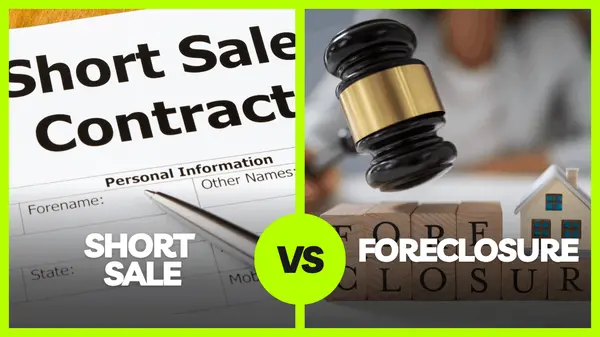
A short sale generally involves selling the home for less than the total debt secured by the property, with lender approval. It is not simply listing a home at a lower price. The lender evaluates the buyer’s offer, property value, financial information, and other requirements before deciding whether to approve the transaction.
What You Need to Know Before Listing
Before putting a property on the market, it is important to get a complete view of the situation. A well-planned sale starts with facts—not assumptions.
1. Know your actual mortgage payoff
Your monthly mortgage statement is not always the same as the amount required to pay off the loan. A payoff amount can include principal, interest, fees, advances, attorney fees, and other amounts depending on the loan and the stage of the foreclosure process.
Ask your mortgage servicer how to request a current payoff statement.
2. Identify every lien or claim
A first mortgage is not always the only obligation attached to a property. Depending on the situation, there may also be:
-
A second mortgage or home-equity line of credit
-
HOA or condo association balances
-
Property tax obligations
-
Judgment liens
-
Code-enforcement liens
-
IRS or other government liens
-
Unpaid contractor or mechanic’s liens
A title search is a crucial part of understanding whether a sale can close and what approvals may be necessary.
3. Understand your court timeline
If you have been served with foreclosure papers, received a notice of hearing, final judgment, or sale date, do not ignore it. Read the documents closely and speak to a qualified Florida attorney about your legal rights, deadlines, and options.
Do not assume that because your home is listed for sale, the foreclosure case will automatically pause. A buyer contract alone does not guarantee that a lender will delay or cancel a sale date.
4. Determine the home’s real market value
An online estimate is not enough when you are making a high-stakes decision. You need a local pricing analysis that reflects:
-
Recent comparable sales
-
Current competition
-
Property condition
-
Location and neighborhood demand
-
Buyer financing conditions
-
HOA or condo requirements, if applicable
-
Repair needs, insurance considerations, and carrying costs
-
The amount of time available to market and close
This is where an experienced local real-estate team can bring clarity. Land to Coast can evaluate how your property may compete in today’s Northeast Florida market and help you understand whether the numbers point toward a standard sale or a lender-approved short-sale conversation.
How to Sell a House Before Foreclosure
Every case is different, but a sale before foreclosure typically follows this process.
Step 1: Have a confidential property and timeline review
Start by understanding the basics:
-
What is the current estimated value of the home?
-
How much is owed on the mortgage and other liens?
-
Has a foreclosure lawsuit been filed?
-
Is there a hearing, final judgment, or auction date?
-
Is there enough time for a standard sale or short-sale review?
-
What documents will be needed?
At Land to Coast, we begin with a judgment-free conversation. You do not have to decide to sell simply because you ask for information.
Step 2: Contact the mortgage servicer
Homeowners should contact their loan servicer as soon as they know there may be trouble making payments. Ask what loss-mitigation or foreclosure-prevention options may be available and document each conversation.
HUD encourages homeowners to communicate with their lender or servicer promptly, respond to lender mail, and seek help early rather than waiting for the situation to become more urgent.
Step 3: Review all available options
Selling may be one option, but it is not necessarily the only one. Depending on the facts, homeowners may need to explore:
-
Reinstatement or repayment options
-
Loan modification
-
Forbearance
-
Refinancing, where feasible
-
A traditional sale
-
A short sale
-
A deed in lieu of foreclosure
-
Other lender-specific loss-mitigation solutions
A HUD-approved housing counselor can help you understand these options, create an action plan, and communicate with your mortgage company at no cost.
Step 4: List and market the property strategically
If selling is the appropriate path, the property needs a realistic pricing and marketing strategy. The goal is not merely to “put it online.” The goal is to attract qualified buyers, generate credible offers, and preserve as much time and leverage as possible.
Land to Coast can help coordinate:
-
A local market-value analysis
-
Pricing strategy based on current competition
-
Professional listing presentation and marketing
-
Buyer screening and offer review
-
Communication with title professionals and involved parties
-
Transaction management through closing
Step 5: Submit a short-sale package if needed
If the home cannot sell for enough to pay all required obligations, the lender may require a short-sale package. Requirements vary by lender but commonly include:
-
A signed purchase agreement
-
A hardship letter
-
Income documentation
-
Bank statements
-
Tax returns or other financial records
-
Listing agreement and marketing history
-
Estimated settlement statement
-
Authorization forms allowing communication with the servicer
The lender may order or review a valuation, evaluate the offer, request additional documents, and issue an approval or denial. A second-lien holder, mortgage insurer, HOA, or other party may also need to approve.
Step 6: Review approval terms before closing
If a short sale is approved, read the approval letter carefully with appropriate legal and tax guidance.
Do not assume that approval automatically means every remaining obligation is waived. The written terms should clarify what the lender expects at closing and whether there are any remaining obligations, contributions, notes, or conditions.
Why Selling Early Matters
A traditional sale or short sale can require weeks or months not days. There may be buyer financing, inspections, appraisal issues, title questions, lender requirements, negotiations, and closing logistics.
The closer you are to a scheduled foreclosure sale, the fewer options may remain.
In Florida, once a court has entered a final judgment, the court directs the clerk to sell the property at public sale on a specified date. Florida’s statute generally sets that date between 20 and 35 days after judgment unless the plaintiff agrees to a later sale date. That does not mean you should assume you have a particular amount of time in your own case. It means you should take every court date, lender notice, and sale notice seriously and seek professional advice quickly.
Common Questions
Can I sell my Florida home if foreclosure has already started?
Often, a sale may still be possible before the foreclosure auction is completed, but the facts and timeline matter. If there is an active lawsuit or scheduled sale date, speak with a Florida foreclosure attorney promptly and contact your mortgage servicer. A real-estate professional can assess the sale side of the equation, including value, marketing time, buyer demand, and possible short-sale logistics.
Can I sell my house if I owe more than it is worth?
Possibly. If a traditional sale will not produce enough funds to pay all liens and costs, a short sale may be considered. The mortgage lender and any other required lienholders must approve the transaction before it can close.
Will listing my home stop foreclosure?
Not automatically. Listing the home, receiving an offer, or entering a contract does not necessarily pause a foreclosure case or auction date. Your lender, servicer, legal counsel, and other involved parties should be informed, and you should not assume any deadline has changed unless you have written confirmation.
Do I have to leave my home immediately?
A foreclosure process and a sale transaction involve different timelines. Your rights and obligations depend on your loan documents, court orders, local procedures, and the facts of your case. For advice specific to occupancy, legal notices, or court deadlines, speak with a qualified Florida attorney.
Can a short sale eliminate what I owe?
It may resolve the mortgage lien so the sale can close, but whether any remaining balance is waived depends on the lender’s written approval terms and other legal considerations. Always review the approval documents carefully with qualified legal and tax professionals.
Is there free foreclosure help available?
Yes. The Consumer Financial Protection Bureau recommends contacting a HUD-approved housing counseling agency for help understanding options and communicating with a mortgage servicer. HUD notes that counseling is available nationwide and may be free or low cost. You can locate a HUD-approved counselor by calling 800-569-4287.hud+1
How Land to Coast Helps Florida Homeowners
Mortgage stress can be deeply personal. Our approach is not about pressure, fear, or forcing a quick listing decision. It is about helping you understand the real-estate facts so you can make a more informed decision.
When you contact Land to Coast, Kaitlyn Hamelin and Iva Zovko can help you:
-
Estimate the likely current market value of your home
-
Review your local competition and potential buyer demand
-
Evaluate whether a traditional sale may be feasible
-
Discuss what a potential short-sale process may involve
-
Build a sale and marketing strategy around your available timeline
-
Coordinate the real-estate transaction with title, buyers, and lender-related requirements
-
Connect the process with the other professionals you may need, including attorneys, tax advisors, lenders, and HUD-approved housing counselors
We serve homeowners across Jacksonville, Jacksonville Beach, Ponte Vedra Beach, St. Johns County, Green Cove Springs, and Northeast Florida.
Talk With Land to Coast Confidentially
If you are worried about missed mortgage payments, a foreclosure notice, or selling your home before an auction date, you do not have to navigate the real-estate side alone.
A confidential conversation with Land to Coast does not obligate you to list your home. We can help you understand the property’s value, the likely sale process, and whether a traditional sale or potential lender-approved short sale may be worth evaluating.
Call or text Land to Coast at 912-614-2392 to discuss your options privately.
Land to Coast is a real-estate team serving Northeast Florida through Keller Williams Atlantic Partners Realty. This article is for general educational purposes only and is not legal, tax, credit, lending, or financial advice. Foreclosure procedures, deadlines, deficiency issues, short-sale approval, credit consequences, and available options vary based on individual circumstances. If you have received legal foreclosure documents or a sale date, consult a qualified Florida attorney and HUD-approved housing counselor promptly.
Recent Posts